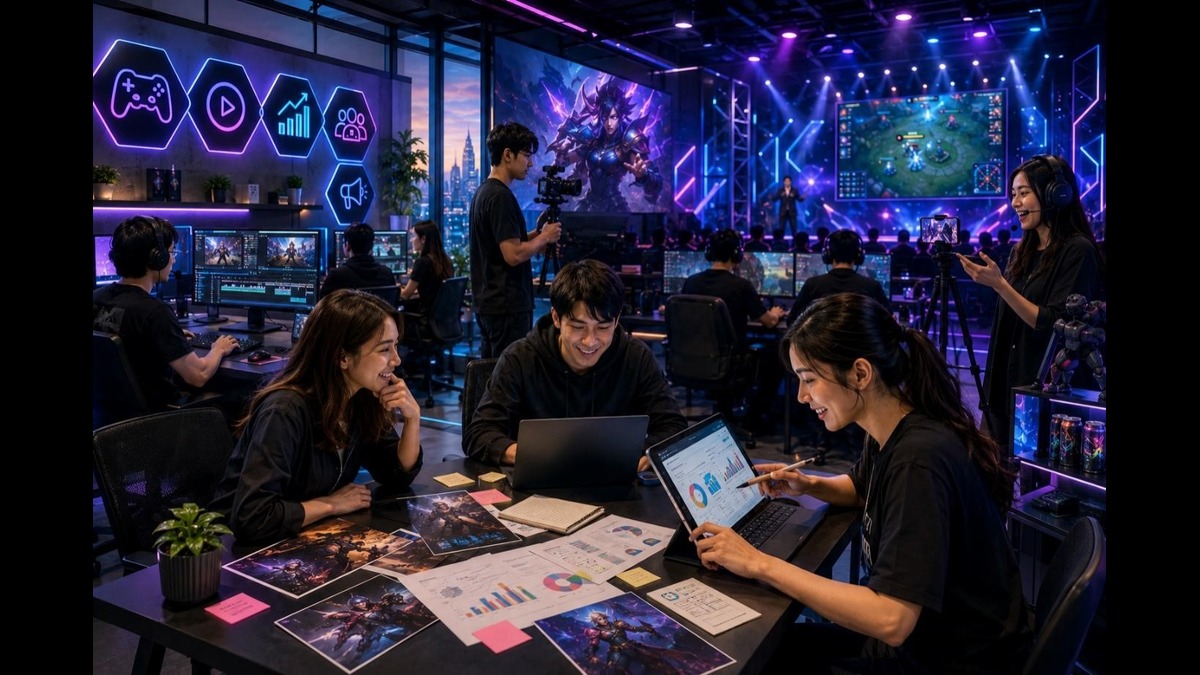
“Full-service” is one of the most frequently used descriptions in agency marketing.
In gaming, however, it should mean much more than providing social media posts, buying advertisements and sending a monthly report.
Games behave differently from ordinary consumer products. They have communities, creators, livestreams, esports ecosystems, live updates and highly engaged audiences that may interact with the product every day.
A genuine gaming marketing partner needs to connect those pieces.
It Starts With Market Strategy
Before planning content, an agency should understand the game.
Who is likely to play it? Which competing titles already hold their attention? What platforms do Thai players use to discover games? Is the objective installation, retention, community growth or esports participation?
Thailand's digital audience is substantial: TikTok's advertising tools reported 56.6 million adult users in late 2025, while major gaming events have demonstrated significant offline demand as well.
Strategy should decide which parts of that audience genuinely matter instead of trying to reach everyone.
Localisation Is More Than Translation
Translating an English campaign into Thai is only the beginning.
Gaming localisation also involves tone, humour, platform culture, terminology and player expectations.
A phrase that works in another Southeast Asian market may sound overly corporate in Thailand. A regional creator may have large follower numbers but little relevance among Thai players.
Local market knowledge helps determine how the global brand should appear without damaging its identity.
Creator and KOL Management Should Be Integrated
Creator marketing needs recruitment, vetting, negotiation, briefing, content review, scheduling and performance analysis.
It also requires relationships.
Publisher behaviour in 2026 reflects this increasingly structured approach. MOONTON has announced creator contests and long-term KOL partnerships in Thailand, while Garena has dedicated roles involving KOL sourcing and creator-program management.
A full-service agency should therefore be able to build a creator portfolio rather than simply provide a spreadsheet of influencer rates.
Social and Content Strategy Must Understand Games
Gaming content cannot consist entirely of promotional artwork.
Players expect gameplay information, entertainment, community discussion, memes, creator content, patch conversations and competitive moments.
Different platforms also require different execution.
A livestream highlight should not simply be uploaded unchanged as a TikTok. Good content operations identify the strongest idea and adapt it to each format.
Paid Media Still Matters
Organic community activity and creators are important, but paid acquisition remains useful for scaling campaigns.
A full-service model can coordinate creative production, audience targeting, retargeting and optimisation with the broader campaign.
The important word is coordinate.
If the KOL team, social team and paid-media team all use unrelated messages, the audience receives three campaigns instead of one.
Strong agencies can also turn high-performing creator content into paid creative where agreements and platform rules permit.
Events Need Specialist Gaming Knowledge
Thailand's event opportunity is difficult to ignore.
The combined gamescom asia x Thailand Game Show attracted 206,159 visitors in 2025, alongside thousands of industry professionals and hundreds of exhibitors.
Events at this scale show why offline activation remains relevant in gaming.
A Gaming Marketing Agency Thailand brands choose as a full-service partner should be able to connect event concepts with creators, social media, livestreaming and post-event content.
Even smaller activations benefit from the same thinking.
Esports Requires Its Own Expertise
Competitive gaming can create powerful community moments, but esports is not interchangeable with conventional influencer marketing.
Tournament formats, competitive integrity, teams, casters, broadcast production and player communications all require specialist understanding.
An agency should know when an esports activation genuinely supports the game and when the same budget would be better spent elsewhere.
Not every title needs a tournament simply because it is a game.
Community Management Is Not Customer Service Alone
Community teams represent an important connection between publishers and players.
They monitor conversations, explain announcements, identify emerging concerns and help create participation around updates.
Their feedback can also inform marketing teams.
For example, if players repeatedly misunderstand one feature, creator briefs and social content can address it before the misunderstanding grows.
Reporting Should Connect the Channels
The biggest advantage of full-service work should be measurement across activities.
A campaign report can examine paid-media acquisition, creator performance, social engagement, event participation and community growth together.
That makes it easier to understand how channels influenced one another.
A creator video might not produce the lowest acquisition cost directly, for example, but could generate high-performing clips later used in paid media.
Channel-by-channel reporting would miss that contribution.
What Clients Should Ask Before Hiring
Before accepting the “full-service” label, publishers should ask an agency:
- Which gaming campaigns has the team actually managed?
- How are Thai KOLs identified and evaluated?
- Can the agency manage offline gaming activations?
- How does it connect paid, creator and organic reporting?
- Does it understand esports operations?
- Who handles localisation and community management?
- How are campaign outcomes tied to business KPIs?
Detailed answers matter more than a long services page.
Conclusion
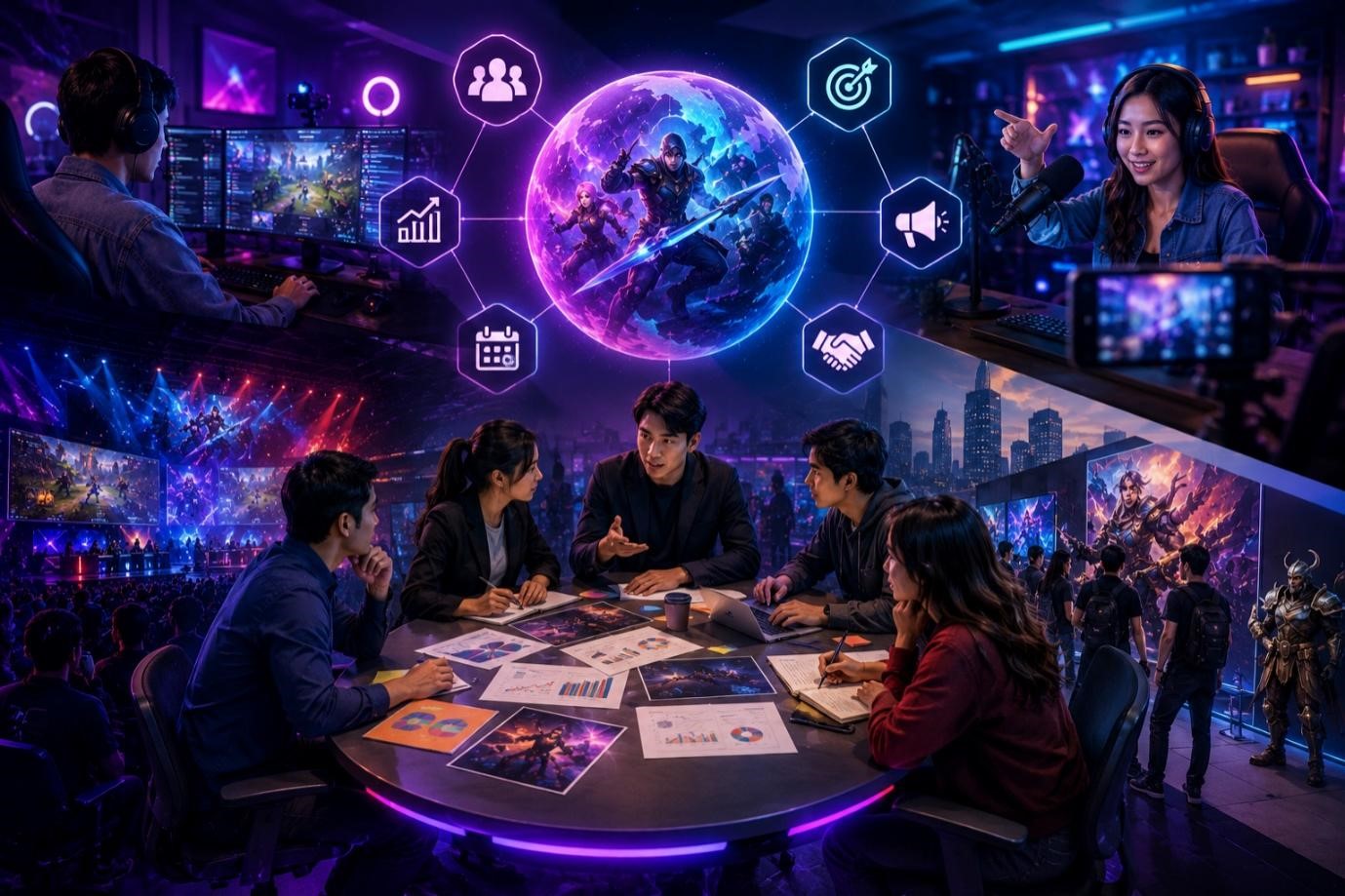
Full-service gaming marketing means connecting strategy, localisation, creators, social media, paid acquisition, community, events and measurement.
It does not mean offering the longest menu of disconnected services.
Thailand's combination of a large digital audience, active creator ecosystem and substantial gaming events creates opportunities for publishers, but those channels work best when they support the same strategy.
A genuine full-service gaming agency should therefore act less like a collection of suppliers and more like one coordinated local marketing team.


